
The Main Color Types
An overview of the main color types and the characteristics of each. We'll look at which parameters help distinguish one color type from another, and how these differences are taken into account during colour-type analysis.
Within the digital approach, three main color types are identified: Deep, Light, and Muted. Each of these contains subtypes that differ according to individual parameters.
It's worth keeping in mind that a color type is only a general description of someone's appearance. Personalised recommendations only emerge once an individual colour profile has been calculated.
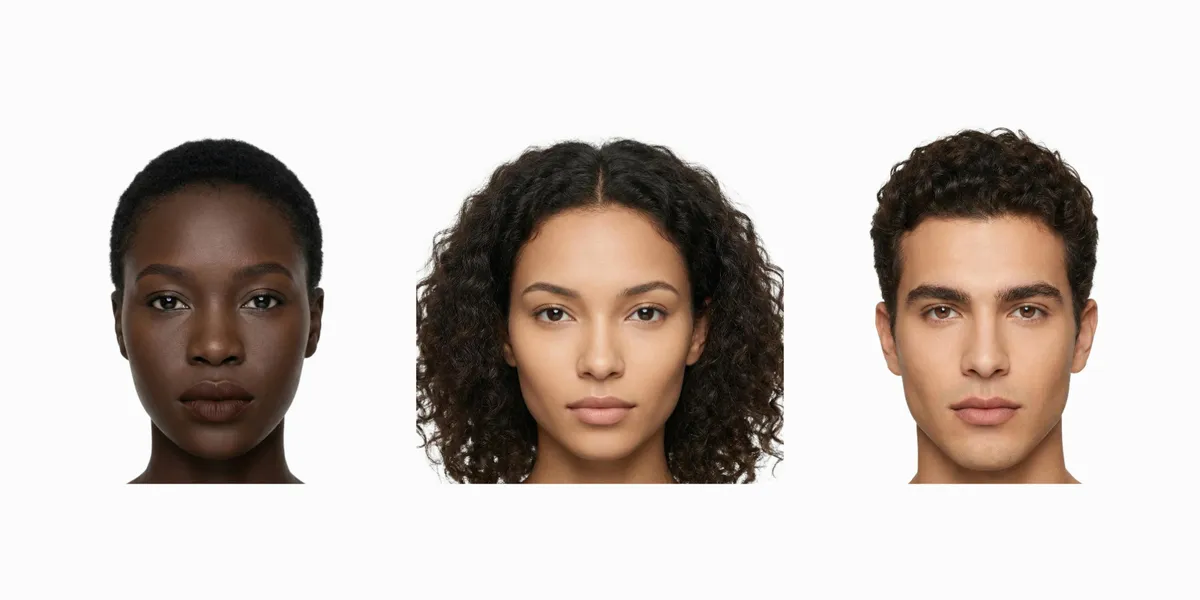
The Deep color type is defined by predominantly dark features: typically dark brown eyes, a richly saturated skin hue, and dark hair.
Light hair and light eyes are not characteristic of this color type.
The Light color type is the opposite of the Deep. It is characterised by light hair and eyes that tend toward cool shades. This color type does not display a strong contrast in brightness or saturation: the shades of the features are close in intensity and do not create sharp transitions.
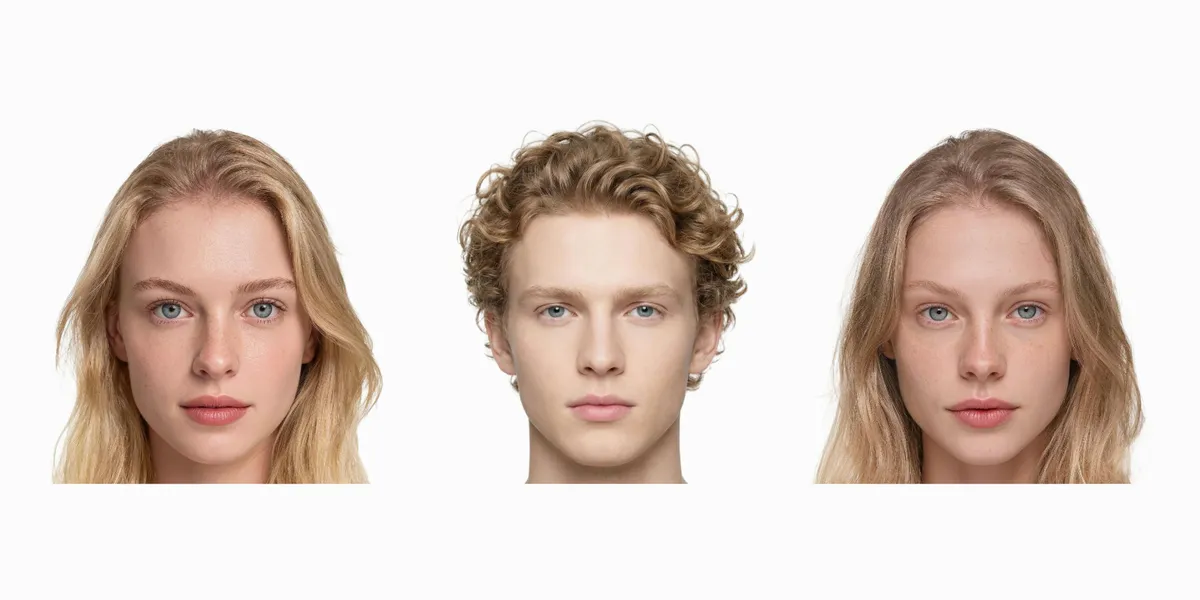
That said, this color type does show a high contrast in hue. For example, the skin may have a red-orange undertone while the eyes are a cool blue.
In this case, the contrast arises not from differences in brightness, but from the difference between hues that sit far apart from one another on the colour wheel.
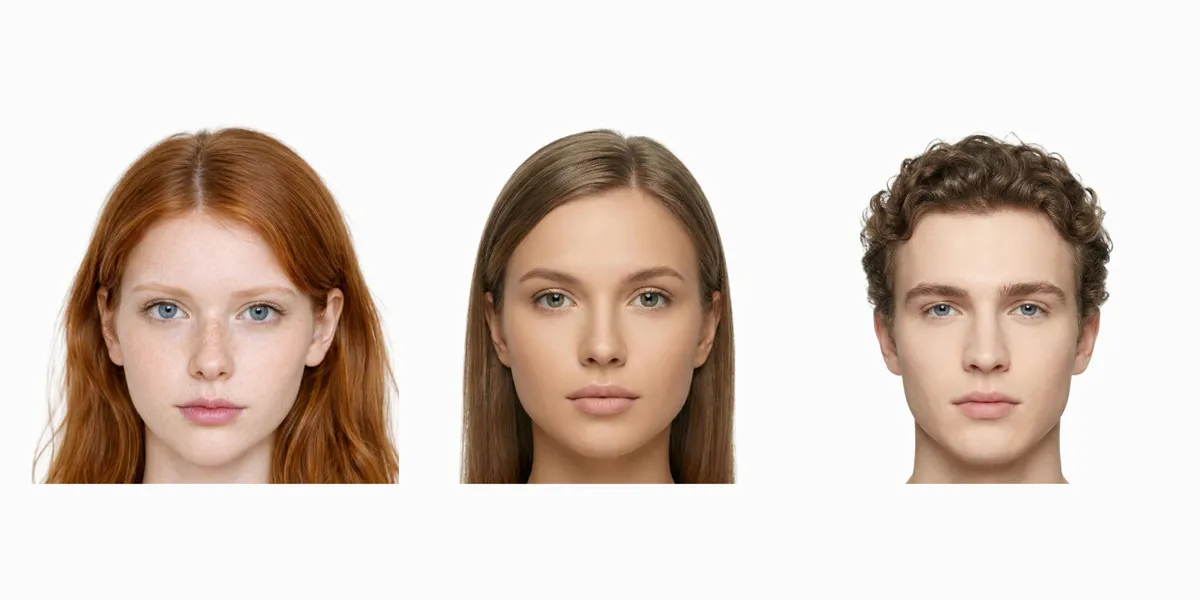
The Muted color type sits in the middle ground between the Light and the Deep. It is characterised by eyes of medium brightness. Hair brightness can lean toward either the Light or the Deep color type.
Eye colour can range from light brown and yellow-orange through to blue, while hair can range from light ash-blonde to medium and dark brunette shades.
To summarise:
▶ The Deep color type shows little contrast in hue. Contrast in brightness is low for subtype 1 (the darkest), but high for the remaining subtypes.
▶ The Light color type, by contrast, displays a pronounced contrast in hue, while contrasts in brightness and saturation remain low.
▶ The Muted color type can combine different kinds of contrast depending on whether it leans closer to the Light or the Deep color type.
Read next
Color Type Analysis
Understanding Your Dominant Tone
Let's explore what a dominant tone is and the role it plays in building a harmonious colour palette.
Color Type Analysis
Map of Harmonious Shades
Let's explore one of the key tools in colour-type analysis — the map of harmonious colours.
Color Type Analysis
The Role of the Harmonious Shade Zone in Colour-Type Analysis
Let's explore the role that the harmonious shade zone plays in building a cohesive colour palette fo…